The Souvenir That Never Leaves the Drawer
A souvenir need not become drawer clutter. Use a simple place-and-use test to choose a keepsake that still earns its space after the trip.
A souvenir is more likely to keep a trip present if it connects a particular place to something you do at home. The souvenir test is simple: before buying an object, name the place it recalls and the ordinary use it could have. If either answer is vague, leave it on the shelf.
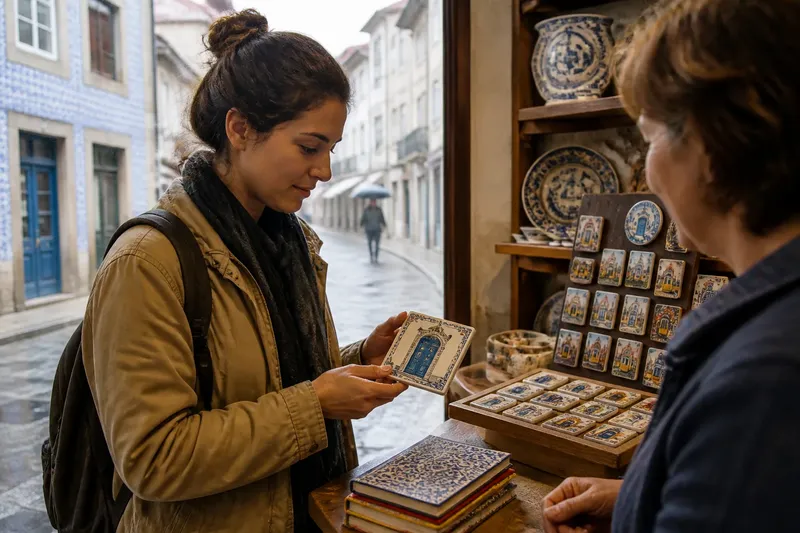
That test does not require a ban on mementoes or a talent for predicting the future. It asks a smaller question: will this object have a life beyond being unpacked? Consider an invented situation: Maya is travelling through Porto and pauses in a shop selling painted ceramic tiles, magnets and small notebooks. She wants something that will bring the city to mind, but she has limited room in her case and a drawer already holding a few forgotten keepsakes.
The Porto shop makes the choice harder
Maya is drawn to a little ceramic tile painted with a blue doorway. The shopkeeper explains that the pattern is made locally, and the doorway resembles one she noticed on a side street that morning. A magnet beside it is cheaper to carry, while a notebook has a useful-looking cover. Each object offers a different kind of promise: local craft, easy display or practical use.
Rather than decide by price, size or the strength of the impulse, Maya gives each object two short descriptions. First: what exact part of Porto does it bring back? Second: where, and how, might it fit into her life at home? She is not looking for a perfect answer. She is checking that the object has a connection more specific than “I was there”.
The souvenir test asks about place and use
The tile passes the place question. It recalls the doorway she stopped to photograph and the walk that led her there. But Maya cannot name a place for it at home without making a new display arrangement, and she does not want to buy an object that requires a small domestic project.
The magnet has a clearer destination: the side of her fridge. Yet it could have come from almost any shop, and it brings no particular moment or detail of the trip to mind. The notebook fares better on use, since Maya keeps notes at work, but its cover alone does not connect it to Porto. On the test, it needs a detail: perhaps the notebook contains a sketch of the blue doorway or a pattern she can identify with that street.
This is the distinction the test is meant to reveal. An object can be useful but generic, or distinctive but destined to sit untouched. A keepsake has a stronger case when the place and the use belong together: a printed tea towel from a market where the seller explained the local pattern, for instance, can recall that encounter and still be used in the kitchen.
Maya chooses the object that already has a job
Maya decides against the tile and magnet. The notebook is not yet convincing either, so she asks whether she can make its connection more concrete without inventing one after the fact. She remembers a small paper card from the same shop showing the doorway design and asks whether it can be slipped inside the cover. It can, and she can picture using the notebook for work notes while seeing the card whenever she opens it.
She buys the notebook, not because every traveller needs a useful souvenir, but because this one has both a place and a likely role. The choice stays modest: she has not bought an object simply to prove she visited Porto, and she has not confused a shop’s claim of local character with a personal memory. The doorway, the walk and the notebook’s intended use form a clear link.
Imagine instead that Maya rarely writes by hand. In that version of the situation, the notebook fails the use question, however attractive its cover. She could keep the photograph she took of the doorway, or choose a small item she already knows she will use. The test is a prompt for an honest decision, not a reason to talk yourself into a purchase.
A keepsake should not need a special excuse
At home, a souvenir’s usefulness is not limited to practical function. A small object may earn its place by being handled often, displayed where it naturally belongs or used as part of an existing routine. The useful question is not “Could I find a use for this?” but “Do I already have a place or habit that would welcome it?” That difference is rather like choosing a mug: the cupboard may contain room, but that does not mean another one will be reached for.
Memory can also attach to something that is not a purchased object. Maya’s photograph, a note about the street name or a sketch in her travel journal might recall the same morning more sharply than a mass-produced keepsake. Those alternatives do not make buying a souvenir wrong; they simply widen the choice beyond the shop counter.
For a useful decision, try these questions before paying:
- What exact place or moment does this object recall? If the answer could describe any stop on the trip, look for a more specific connection.
- What will I do with it at home? Name an existing use or a natural place for it, rather than an imagined future project.
- Would I still want it without the label or story attached? This can separate genuine preference from the pressure to buy a memento.
- Does it fit the space and care I can give it? Consider whether it needs display room, delicate handling or storage you do not have.
- Could a photograph or note preserve the same memory better? If so, the physical object may not need to come home.
Small souvenirs can still carry a specific story
The test does not favour expensive craftwork over modest objects. A printed map from a local bookshop, a recipe card picked up after a memorable meal or a small piece of stationery can be a better fit than an elaborate ornament. What matters is whether you can connect it to a recognisable detail and whether it has a plausible life after unpacking.
Nor does every purchase need to serve a household function. A shell collected where collection is allowed, a ticket kept in a journal or a small object displayed beside books may have a clear place even if it is not useful in the ordinary sense. Where collection rules or a maker’s care instructions matter, check them before taking or buying anything; local rules and labels decide what is appropriate.
What if the memory matters more than the object?
Does a souvenir need to be useful?
No. Its “use” can be a natural place where you enjoy seeing it, rather than a practical task. The point is to know where it belongs before buying it.
How can I tell whether a souvenir is genuinely local?
Ask the seller where it was made and what the design represents, then consider whether the answer connects to something you experienced. A “local” label alone may describe the shop or theme rather than the object’s origin.
What if I regret leaving something behind?
Make a note of the item, shop and place while the details are fresh, and take a photograph if appropriate. That gives you time to decide later without treating a passing impulse as a deadline.
Can a photograph count as a keepsake?
Yes, especially if you add a short note about what happened just before or after the image. A picture of the blue doorway would mean more to Maya with the street and her reason for stopping recorded beside it.
The drawer is useful evidence
Maya’s choice is not a rule that every souvenir must be used weekly or displayed prominently. It is a way to notice when an object’s strongest appeal exists only in the shop. If a keepsake has a specific place behind it and a place in your life ahead, it has a better chance of surviving the journey home with its purpose intact.
The next time a shelf offers a convenient little piece of a trip, give it a quiet moment and ask the souvenir test: what place does it recall, and where will it live? If the answers come readily, take it home if you wish. If they do not, the memory can travel without another object in the drawer.