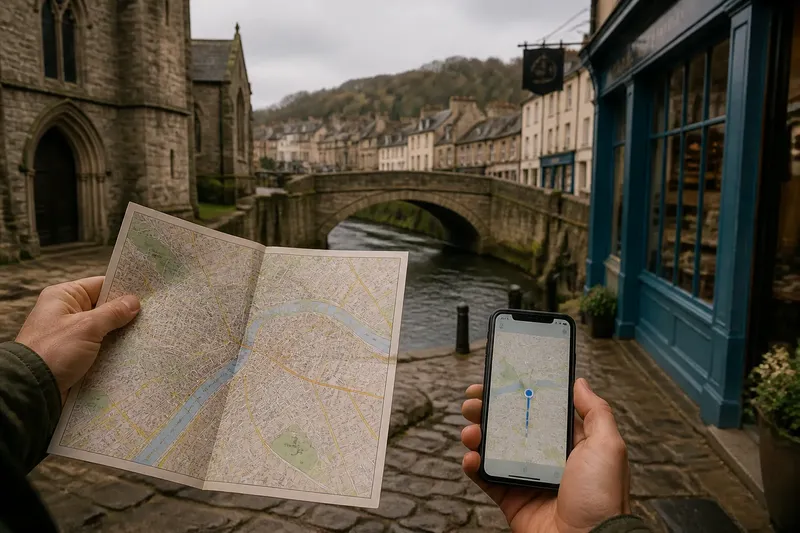
One Bag, Two Jobs: Separating Journey Gear from Day Gear
A main travel bag and a day bag serve different jobs. Separate what stays at your accommodation from what needs to be reachable while you are out.
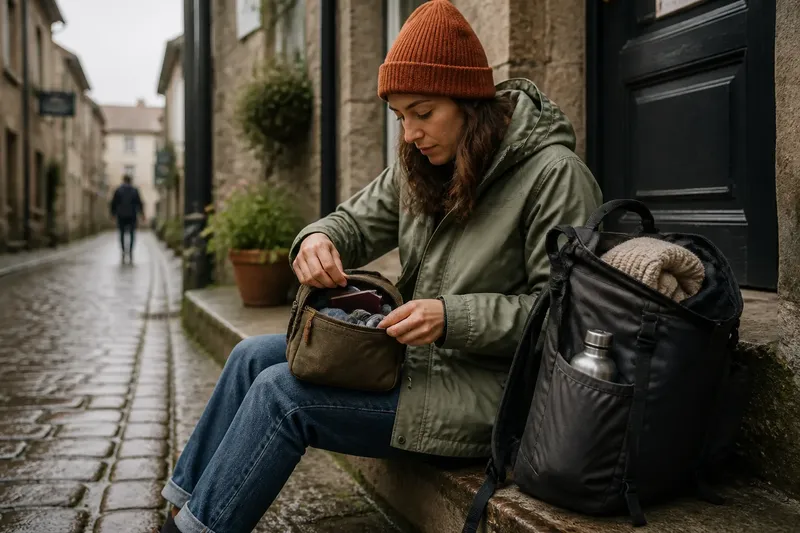
For most trips, the main travel bag should carry what you need between stays, while a day bag holds what you may reach for while you are out. This division works best when each item has a clear job: a spare shirt belongs with the main travel bag; a transit card belongs in the day bag. Treating both bags as general storage is how a simple search for a phone charger becomes a small excavation.
The choice is not simply whether to take a second bag. It is whether your days involve enough movement, changing conditions or access needs to justify carrying one. The right arrangement depends on how you travel, where your luggage waits and what you need close at hand.
Give each bag a different job
The main travel bag is for items you need at a base or between places. That usually means clothing, toiletries, sleepwear, spare footwear and less frequently used accessories. Its contents should support the trip as a whole, not every brief outing.
The day bag is for items used during the day or needed quickly: water, a light layer, a small notebook, a snack, a compact umbrella or a camera. It is also the natural place for things you must keep with you, such as a passport or medication, if that suits your circumstances and storage arrangements.
This is a division by access, not by category. A cable could belong in either bag. If you need it at the airport or on a train, keep it in the day bag; if it is only for charging devices in your room, put it with the main bag. A kitchen drawer offers a useful analogy: the objects used every day sit within reach, while the spare batteries do not need a place beside the kettle.
Use small pouches to keep related items together, but avoid turning every object into a separate packing system. A single pouch for charging equipment can move between bags when the trip changes. The point is to know where an item lives, not to create a filing cabinet with shoulder straps.
Choose the arrangement that matches your trip
You travel between places with luggage in hand. Keep the main bag focused on clothing and other base-to-base needs. Use a day bag for the objects you may want during the journey, especially if the main bag will be overhead, in a luggage compartment or otherwise awkward to reach. The day bag should still be small enough to manage alongside the main bag through stations, pavements and doorways.
You stay in one place and take short outings. A day bag can be the only bag you need outside your accommodation. Leave spare clothes and bathroom items in the main bag, then take only what the outing calls for. If you expect to return to the room between activities, there is little reason to carry a change of clothes all day.
You are travelling with a bulky or awkward main bag. Choose a day bag that can be worn comfortably while the larger bag is carried, pulled or loaded. A small cross-body bag may be easier than a backpack in crowded spaces; a light backpack may be more comfortable if you walk for longer stretches. Check how the straps sit alongside your main bag before deciding that a clever attachment system is worth the extra fuss.
You want one bag for the whole trip. This can suit a short stay, a light packing style or a journey where you rarely need to leave your belongings behind. It is less convenient if you want to explore without carrying everything. A foldable tote or compact day bag packed inside the main bag can provide an option without requiring you to carry a second bag at all times.
You need certain items close at hand. Put them in a secure, easy-to-reach pocket in the day bag rather than burying them beneath clothes. That may include travel documents, a phone, a transit card or essential personal items. Keep valuables discreet and follow the storage advice that applies to your accommodation and mode of travel.
Keep access needs from creating duplicate packing
Separating bags can reduce rummaging, but it can also tempt you to pack two versions of everything. Before adding a second charger, lip balm or water bottle, decide whether the item must genuinely be available in both places. If not, assign it a home and move it when needed.
Some items do earn a duplicate. A low-cost pen or a spare tote may be useful in each bag because moving it back and forth would be more trouble than carrying another. Other objects are better shared: a camera, a power bank or a specific adapter can travel in one pouch that moves according to the day’s plans. The choice is a question of convenience, bulk and the consequences of leaving the item behind.
Say you are taking a train to a town where your main bag will go straight to the hotel, and you expect to walk around before checking in. Put a phone cable, snack, water bottle and light waterproof layer in the day bag because they may be useful before you reach the room. Keep the rest of your clothes in the main bag, and leave the spare charger there if you can wait until check-in to use it. The observable result should be a day bag that serves the outing without becoming a second wardrobe.
On a different day, you might leave the day bag at your accommodation and carry only a small wallet and phone. That is not a failure of the system. A useful bag arrangement changes with the day rather than insisting that every item travel everywhere.
Set up the bags for the moment you need something
Think about the awkward moments, not just the packing list. On a train, you may want headphones without opening the main bag. In a café, you may need a notebook and pen. At your accommodation, you may want to unpack toiletries without emptying the day bag onto the bed.
Give frequently used items stable locations. Keep a transit card in one accessible pocket, not sometimes in a jacket and sometimes in a pouch. Put small loose items in a zipped compartment so they do not migrate to the bottom. If your day bag has several similar pockets, choose one for each purpose and keep the arrangement consistent.
A bag that is comfortable when empty can feel different after it is loaded. Try carrying it with the items you expect to use, and notice whether the weight pulls on one shoulder, whether a bottle knocks against other belongings, and whether you can reach the things you need without taking everything out. Adjust the contents or choose a different bag if access becomes fiddly.
For a day bag packed inside the main one, consider how it folds or stores. A soft tote can be easy to stow but less comfortable with weight; a structured small backpack may take more room but carry a camera or water more securely. Choose for the use you expect, not the appeal of a bag that is compact only when it is empty.
What should go in the day bag?
Should travel documents stay in the day bag?
Keep documents you need during the journey in a secure place you can reach without opening the main bag. For identification or other sensitive items, choose a location that is discreet and suited to your route and storage arrangements. Avoid moving them between pockets without a clear reason.
Should a day bag contain a change of clothes?
Usually, not for an ordinary outing from a settled base. A light layer or rain protection may be more useful because it addresses changing conditions without adding a full outfit. A change of clothes makes sense when your plans or access to the main bag make it necessary.
Is a backpack or cross-body bag better?
A backpack distributes weight across both shoulders and can suit a longer walk, while a cross-body bag keeps contents accessible and can feel less cumbersome in a tight indoor space. The better choice depends on what you carry, how long you will wear it and how the bag sits alongside your main luggage. Try the loaded bag rather than choosing from its shape alone.
Can a foldable tote replace a day bag?
It can work for light, occasional carrying, such as bringing a layer or a few purchases back to your accommodation. A tote may be less comfortable for heavier loads or long walks, and its open top may not suit every setting. Use it when its limits fit the day, rather than treating it as a universal substitute.
Let the day decide what travels with you
Before leaving your accommodation, take out only what the day calls for. A short visit nearby may need a phone, keys and a payment card; a longer walk may call for water, a snack and an extra layer. This small reset keeps the day bag from becoming a portable version of the main bag.
When you return, put shared items back in their assigned places before the next outing. That makes the arrangement easier to trust: the main bag remains the store of trip-wide belongings, and the day bag carries only what is useful now. For one bag, two jobs to work, the difference should be visible in what you leave behind as much as in what you bring.